|
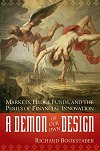 A Demon of Our Own Design: Markets, Hedge Funds, and the Perils of Financial Innovation
Why do markets keep crashing and why are financial crises greater than ever before? As the risk manager to some of the leading
firms on Wall Street from Morgan Stanley to Salomon and Citigroup and a member of some of the world's largest hedge funds, from
Moore Capital to Ziff Brothers and FrontPoint Partners, Rick Bookstaber has seen the ghost inside the machine and vividly shows
us a world that is even riskier than we think. The very things done to make markets safer, have, in fact, created a world that
is far more dangerous. From the 1987 crash to Citigroup closing the Salomon Arb unit, from staggering losses at UBS to the demise
of Long-Term Capital Management, Bookstaber gives readers a front row seat to the management decisions made by some of the most
powerful financial figures in the world that led to catastrophe, and describes the impact of his own activities on markets and
market crashes. Much of the innovation of the last 30 years has wreaked havoc on the markets and cost trillions of dollars. A
Demon of Our Own Design tells the story of man's attempt to manage market risk and what it has wrought. In the process of showing
what we have done, Bookstaber shines a light on what the future holds for a world where capital and power have moved from Wall
Street institutions to elite and highly leveraged hedge funds.
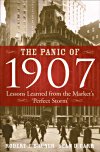 The Panic of 1907: Lessons Learned from the Market's Perfect Storm
Though business professors Bruner and Carr approach their subject, the spectacular financial crisis that gave America the FDIC
and the Federal Reserve, with grave pedantry, they devote the majority of the book to the more colorful events and personalities
of the crisis, which even academic prose cannot dull. The chronicle follows one speculator's attempt to corner the copper market,
which leads to panic, the failure of banks and trusts and the impending bankruptcy of New York City. In the midst of chaos, one
man was able to halt the domino effect with calm, character and capital: J. Pierpont Morgan. The Panic, the authors note, hit
America at a moment eerily similar to our own: coming off 50 years of postwar economic expansion with a Republican "moralist"
in the White House, an increasingly interventionist government, the formation of enormous new corporate conglomerates and a
muckraking news media fueling resentment.
 The Complete Guide to Day Trading: A Practical Manual From a Professional Day Trading Coach
Do you want to be a day trader? Every day, millions of dollars change hands in the markets, presenting the perfect opportunity
for people just like you to make significant money and profits through the art of day trading. But here's the question: is day
trading right for you? And, if it is, how do you get started? In his new three-part guide, professional day trading coach
Markus Heitkoetter lays out a simple, proven system for trading success. From the basic essentials of trading to the actual
process of making money in the markets, he'll cover it all. Loaded with easy-to-use information, proven and reliable
strategies and guidelines, and a practical hands-on approach to the industry, The Complete Guide to Day Trading is your
own personal manual to success in the markets.
 Making Big Money Investing In Foreclosures Without Cash or Credit
In this thoroughly updated guide, bestselling author Peter Conti shows real estate investors how to: -Understand the concepts involved
in investing in foreclosures -Find a motivated seller -Structure the deals, including how to buy with little or nothing down -Negotiate
with sellers in foreclosure, including how to overcome obstacles and close deals -Avoid costly contract pitfalls -Hold on to newly
acquired properties and grow a portfolio for long-term equity build-up. Peter Conti pulls all the pieces of the transaction together
into a step-by-step action plan, so that investors can apply what they have learned and start making money.
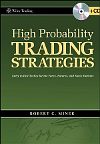 High Probability Trading Strategies: Entry to Exit Tactics for the Forex, Futures, and Stock Markets
With this book as your guide, you'll quickly learn how to recognize high-probability trading opportunities, pinpoint exact entry and stop prices,
and manage a trade until it's completely closed out. You'll discover how the four key factors of dual-time-frame-momentum, pattern, price, and
time can guide you down the path to trading profits. As you become familiar with the proven strategies and techniques taught in High Probability
Trading Strategies, you'll also come to understand the type of market information you can use to make specific trade decisions and how to execute
those decisions from start to finish. Miner teaches in a practical, step-by-step manner until a complete trading plan is developed. While the ideas
found here are essential to trading success, the best way to learn is by example. That's why Miner has devoted an entire chapter called "Real
Traders, Real Time" to trade examples submitted by his past students. In it, you'll see how they apply the strategies taught throughout the book
to markets around the world. A companion video CD completes this comprehensive learning package. It's not a word-for-word review of the material
in the book, but rather an additional tool to illustrate more examples. With it, you'll learn how to put high-probability trading strategies into
practice, day by day and bar, by bar for many different markets and time frames.
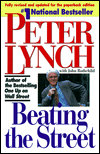 Beating the Street
by Peter Lynch, John Rothchild
Beating the Street examines famed money manager Peter Lynch's common sense approach to the
stock market and individual securities analysis. For both layman and expert, he provides clear insights
into the seemingly complex task of making money in the stock market. Lynch, for those unfamiliar with the pantheon of
investment gods, managed Fidelity's flagship Magellan fund for more than 20 years, compounding
one of the most fantastic performance records ever.
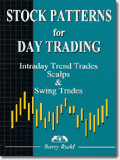 Stock Patterns for Day
Trading
Stock Patterns for Day
Trading
Written by a professional full time stock trader who makes his living from
short term trading in individual stocks, this book discloses, in
detail, the strategies and methods he uses in his own trading, and provides
invaluable advice to those who seek to profit from short term and
intraday price swings.
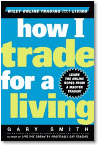 How I Trade for a Living
Making a living trading from home is the dream of just about every
trader and active investor. Gary Smith offers his simple trading strategy,
without the complex indicators or heavy charts, that can be used by
anyone anywhere to make a killing and earn a living.
 Strategic Stock Trading: Master Personal Finance Using Wallstreetwindow Stock Investing Strategies With Stock Market Technical Analysis
Many say few know more about stock trading than Michael Swanson, who ran a top ranked hedge fund for four years and has
built up a huge audience of readers on his website WallStreetWindow.com thanks to the accuracy of his market calls and
investment acumen, including making over 50% in 2008 in one of the worst years for the stock market ever. His book
Strategic Stock Trading demystifies the stock market by explaining what truly makes the stock market and individual
stocks move the way they do and shows you how you can take advantage of it. The book explains the principles required
for you to become an elite trader in the stock market, including what and when to buy and sell using the Two Fold Formula,
how to manage risk, and how to be able to foresee real changes in the overall trend of the market before the crowd does.
 Short Term Trading Strategies That Work
Market volatility has been at record levels in recent months, leaving every trader and investor to ask the same question:
"Am I prepared to handle the market conditions?" In Larry Connors', CEO and Founder of TradingMarkets, Short Term Trading
Strategies That Work, he discusses 16 simple strategies crucial to the success of any trader or investor. These strategies
have been both back-tested up to 1995, but also have been traded by Larry and his team under multiple market conditions.
This is the must have book for anyone seeking to improve their trading in any market condition. You'll see strategies and
methods which you've likely never seen before, all of which are statistically backed by more than a decade's worth of research.
 Street Smarts
This book was written by two expert traders who have teamed up to
write a text that every serious trader should not be without. It is
considered one of the best manuals on short term trading.
This book is written for the active trader. It is a compilation of strategies that the two of them
have been trading with for the last 15 years in both equities and futures.
 The Neatest Little Guide to Stock Market Investing, 2010 Edition
The essential stock market guide updated with timely strategies for investing after the crash.
Now in its fourth edition, Jason Kelly's The Neatest Little Guide to Stock Market Investing has established itself as a clear, concise, and highly effective guide for investing in stocks. This comprehensively updated edition contains tried-and-true investment principles to teach investors how to create and refine a profitable investment program. New strategies and content include:
Basic tips on when to invest and how to reduce the amount of risk in this turbulent market,
A new core portfolio technique that shows readers a way to achieve 3 percent quarterly performance with the IJR exchange-traded fund,
An exclusive interview with legendary Legg Mason investment counselor, Bill Miller, including his thoughts on the financial crash of 2008
Accessible and intelligent, The Neatest Little Guide to Stock Market Investing is what every investor needs to keep pace in the current market.
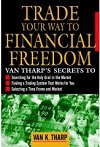 Trade Your Way to Financial Freedom
The book is clearly written and makes generous use of practical examples and models. The principles he [Tharp] promotes
for traders, if followed closely, can be applied to a wide group of investors. This book book gets directly to the heart
of what it takes to be a successful trader.
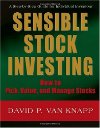 SENSIBLE STOCK INVESTING: How to Pick, Value, and Manage Stocks
For the millions of individual stock investors who want to improve their results-and for beginners who want to get started on the right
foot-Sensible Stock Investing: How to Pick, Value, and Manage Stocks is a comprehensive yet easy-to-follow guide.Written for the busy
individual, Sensible Stock Investing presents the investment process in three phases: rating companies for their intrinsic soundness;
valuing stocks to find advantageous purchase prices; and managing a portfolio once it is established. Author David Van Knapp breaks
these stages into discrete steps and shows how the individual investor-in just a few hours per month-can outperform most mutual funds
by investing intelligently and minimizing risk at every stage. As you will see from the two actual, proven portfolios described in
Sensible Stock Investing, you don't have to be a mathematical genius or investment professional to succeed in the stock market!
Whether you are an experienced investor or just getting started, Sensible Stock Investing describes straightforward methods, provides
the forms and tools you need, and shows you what to do every step of the way to successfully navigate the stock market with intelligent
investment practices.
Recommended Reading
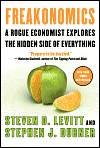 Freakonomics : A Rogue Economist Explores the Hidden Side of Everything
Forget your image of an economist as a crusty professor worried about fluctuating interest rates: Levitt focuses his
attention on more intimate real-world issues, like whether reading to your baby will make her a better student.
Recognition by fellow economists as one of the best young minds in his field led to a profile in the New York Times,
written by Dubner, and that original article serves as a broad outline for an expanded look at Levitt's search for the
hidden incentives behind all sorts of behavior. There isn't really a grand theory of everything here, except perhaps
the suggestion that self-styled experts have a vested interest in promoting conventional wisdom even when it's wrong.
Instead, Dubner and Levitt deconstruct everything from the organizational structure of drug-dealing gangs to baby-naming
patterns. Underlying all these research subjects is a belief that complex phenomena can be understood if we find the right
perspective. Levitt has a knack for making that principle relevant to our daily lives, which could make this book
a hit. Malcolm Gladwell blurbs that Levitt "has the most interesting mind in America."
Click
here for more details
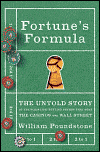 Fortune's Formula : The Untold Story of the Scientific Betting System That Beat the Casinos and Wall Street
Fortune's Formula is a fascinating study of the connections between such seemingly unrelated topics as gambling,
information theory, stock investing, and applied mathematics. The story involves the stunning brainpower of men
such as MIT professor Claude Shannon, who single-handedly invented information theory, the science behind the
Internet and all digital media; Ed Thorpe; and John Kelly of Bell Laboratories, who developed the "Kelly
criterion," a now-legendary investment strategy for maximizing growth while controlling risk. Initially,
Shannon and Thorpe took Kelly's theory to Las Vegas and applied it to roulette and blackjack. Later, they
took it to Wall Street and cleaned up--Shannon made a personal fortune while Thorpe created the highly
successful hedge firm Princeton-Newport Partners. They both discovered that Kelly's system was particularly
effective when applied to arbitrage (minute price differences that result from market inefficiencies). As
Poundstone ably demonstrates, the merits of Kelly's criterion are still hotly debated today.
Click
here for more details
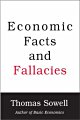 Economic Facts and Fallacies
Economic Facts and Fallacies exposes some of the most popular fallacies about economic issues-and does so in a lively manner
and without requiring any prior knowledge of economics by the reader. These include many beliefs widely disseminated in the
media and by politicians, such as mistaken ideas about urban problems, income differences, male-female economic differences,
as well as economics fallacies about academia, about race, and about Third World countries. One of the themes of Economic
Facts and Fallacies is that fallacies are not simply crazy ideas but in fact have a certain plausibility that gives them
their staying power-and makes careful examination of their flaws both necessary and important, as well as sometimes humorous.
Written in the easy-to-follow style of the author’s Basic Economics, this latest book is able to go into greater depth, with
real world examples, on specific issues.
Click
here for more details
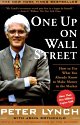 One Up On Wall Street One Up On Wall Street
Lynch, director of the Fidelity Magellan Fund, the nation's largest equity fund ($9 billion in assets),
argues that average investors can beat Wall Street professionals by using the information that they encounter in their
everyday lives. For example, Lynch invested in Hanes after his wife told him about the popularity of L'eggs pantyhose.
Other winning stocks that average investors could have picked well before Wall Street became aware of them include
LaQuinta motels, the Limited clothing store chain and Agency Rent-A-Car, note the authors. They advise readers to look
for spectacular growth among companies that sound dull; do something disagreeable; are spinoffs; are buying back their
own stock. They caution readers to avoid companies touted as the next IBM or Xerox; that are diversifying ("diworseifying");
that depend on a single customer. The book is also a primer on how the stock market works and is written in a light,
entertaining style.
Click
here for more details
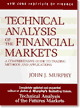 Technical Analysis of the Financial
Markets
Technical Analysis of the Financial
Markets
Superb book, exceptionally well written. Both the most
comprehensive book on and a standard reference for technical analysis.
Provides clear and lucid coverage of all major analytical techniques. Major
emphasis on charting as a basis for price forecasting and trading.
Click
here for more details
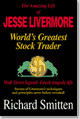 The Amazing Life of Jesse Livermore: World's Greatest
Stock Trader The Amazing Life of Jesse Livermore: World's Greatest
Stock Trader
Jesse Livermore is considered by many of
todays top Wall Street traders as the greatest trader who ever lived.
For the first time, in one book: his trading secrets, techniques and
stock market methods are revealed. Livermore broke new ground in trading
the market.
Click
here for more details
 Dynamic Trading: Dynamic Concepts in Time, Price, and
Pattern Analysis Dynamic Trading: Dynamic Concepts in Time, Price, and
Pattern Analysis
Learn Dynamic Price Projection
techniques and how to project well in advance the specific price zones for
support, resistance and trend termination.
Click
here for more details
 Reminiscences of a Stock Operator
If you've ever spent weekends and nights puzzling over whether to buy, sell, or hold a position in
whatever investment--be it stock, bonds, or pork bellies, you'll be glad that you read this book.
Reminiscences of a Stock Operator is full of lessons that are as relevant today as they were in
1923 when the book was first published.
Click
here for more details
 The Trading Rule that Can Make You Rich The Trading Rule that Can Make You Rich
Discusses a simple but effective method for timing market entry,
based on a technique used by the legendary W.D. Gann, who said of this
method, You can make a fortune by following this one rule alone!
Click
here for more details
 John Murphy on Chart Analysis
Renowned market
technician John Murphy presents basic principals of technical analysis in
easy-to-understand terms.
Click
here for more details
 The Millionaire Next Door The Millionaire Next Door
How can you join the ranks of America's wealthy (defined as people whose net worth is over one
million dollars)? It's easy, say doctors Stanley and Danko, who have spent the last 20 years interviewing members
of this elite club: you just have to follow seven simple rules. The first rule is, always live well below your means.
The last rule is, choose your occupation wisely. You'll have to buy the book to find out the other five.
Click
here for more details
 Rich Dad, Poor Dad: What the Rich Teach Their Kids About Money--That the Poor and Middle Class Do Not!
Personal-finance author and lecturer Robert Kiyosaki developed his unique economic perspective through exposure to a
pair of disparate influences: his own highly educated but fiscally unstable father, and the multimillionaire eighth-grade
dropout father of his closest friend. The lifelong monetary problems experienced by his "poor dad" (whose weekly paychecks,
while respectable, were never quite sufficient to meet family needs) pounded home the counterpoint communicated by his
"rich dad" (that "the poor and the middle class work for money," but "the rich have money work for them").
Click
here for more details
|



|
